SHORT COURSE | Giotto’s Scrovegni Chapel from Top to Bottom | Richard Stemp
SHORT COURSE | Giotto’s Scrovegni Chapel from Top to Bottom | Richard Stemp
From our archive: lectures given in November 2020
Link expires: Wednesday 30 September 2026
Please ensure you allow enough time to watch the recording before the link expires.
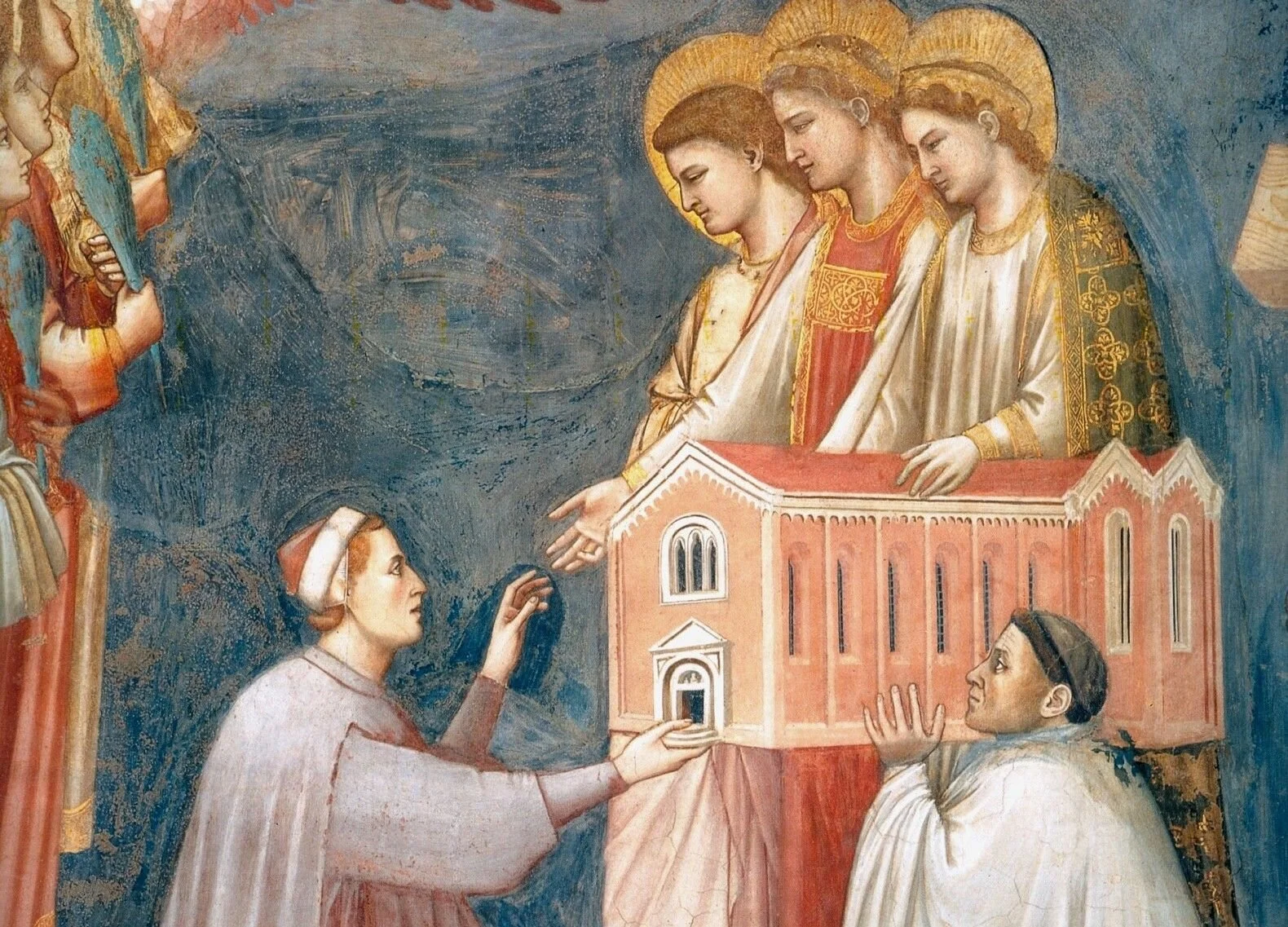
Of all the decorative schemes in world art, the frescoes by Giotto (1267-1337) in Padua must be among the most coherent and most profound. Learn about their origins in this enlightening short course of three one-hour lectures led by art historian and National Gallery educator Dr. Richard Stemp; discover the meaning of each image, and, by considering the ways in which they relate to one another, understand the full extent of Giotto’s genius.
Lecture One
Richard Stemp introduces both artist, Giotto, and patron, Enrico Scrovegni, and talk about the reasons for the commission: the sins of the father. Scrovegni Senior was a noted usurer, even featuring among the damned in Dante’s Divine Comedy: Enrico sought to atone for his father’s misdeeds. The lecture will look at ways in which this affects the choice of imagery within the chapel, dominated as it is by an enormous painting of the Last Judgement, and determine how the frescoes are ordered and arranged.
Lecture Two
The chapel was dedicated on the Feast of the Annunciation in 1305 to Santa Maria della Carità - St Mary of Charity, or Mercy - a role adopted by the Virgin for those who wish her to be especially charitable toward their sins. The second lecture therefore focusses on the role of the Virgin Mary within the chapel, recounting the story of her birth and betrothal, as shown in the frescoes, and the part she played in the early life of Jesus.
Lecture Three
The final lecture considers Christ’s life and afterlife, recounting his progress after he left his mother’s side, and the path he took through Holy Week, the Passion and beyond. When all of the individual scenes have been introduced, participants in the course will understand Giotto’s brilliant placing of every image, and synthesise his remarkable achievement to bring to light the overall message of the chapel.